
Essentially every interior drainage installation is sold with a lifetime warranty. The warranties are genuine. They are also considerably narrower than the phrase implies, and the narrowness is written in the document rather than said in the conversation.
What it typically covers
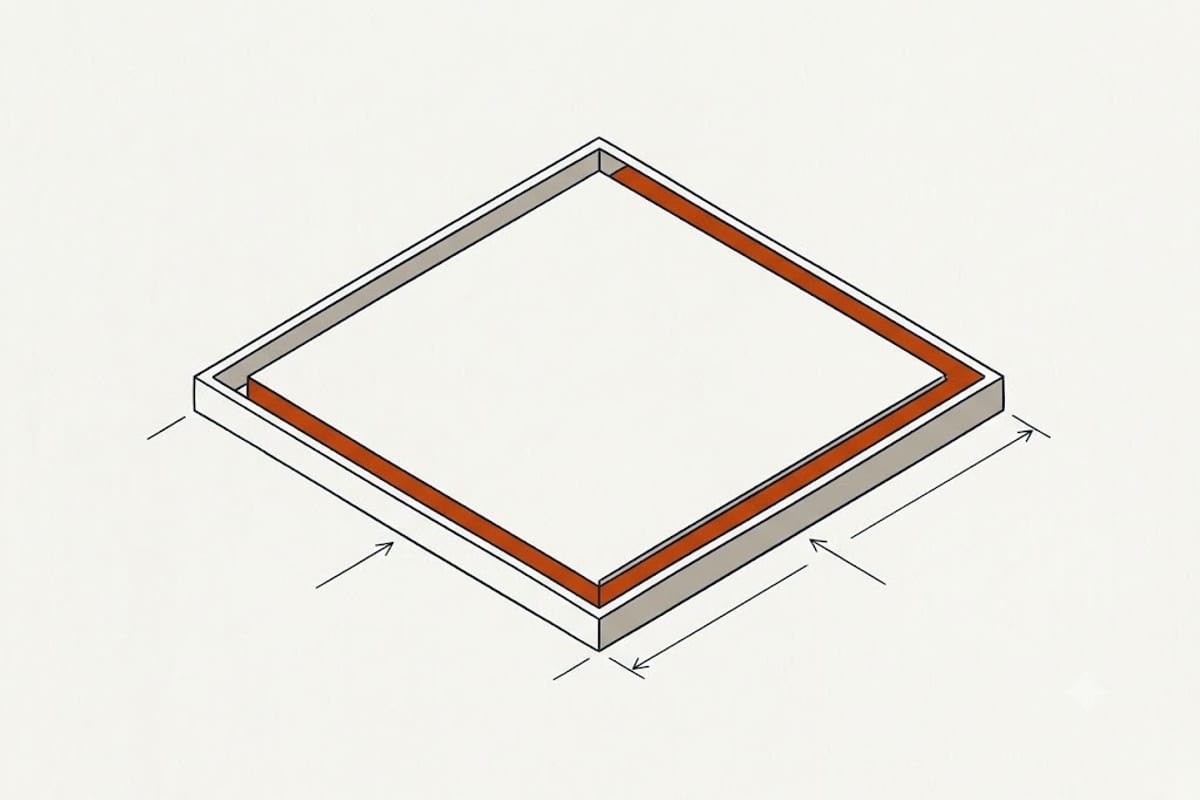
Water entering through the treated section, at or near the wall-floor joint, where the system was installed.
That is a real commitment and it is the correct scope for the product — the system is designed to collect water at that joint along the walls where it was fitted.
Six common exclusions
Untreated sections. Where a partial perimeter was installed, water entering elsewhere is not covered. This is the single most important line to read where the quote was for one or two walls.
Water entering above the system — through a crack higher up the wall, a window well, or a rim joist. The system collects at the base; it does not intercept water arriving above.
Condensation. Humidity is not seepage and no drainage system addresses it.
Water through the floor away from the perimeter.
Pump failure, or damage resulting from it. The pump is usually covered by its own manufacturer warranty for a much shorter period, and flood damage from a failed pump is typically excluded entirely.
Acts of god, sewer backup, and flooding from outside, which are insurance questions rather than warranty ones.
Transferability is the term to negotiate
At sale, a transferable warranty is a real asset and a non-transferable one is worth almost nothing to a buyer.
The variants in circulation: transferable once, transferable for a fee, transferable within a set number of years, or personal to the original owner.
This is the item most worth raising before signing, because it is occasionally negotiable at that point and never afterwards.
Who honours it
A warranty from a company that has closed is a piece of paper. Some contractors back their warranties through a third-party administrator or an industry programme, which survives the contractor.
Ask. It is a fair question and the answer is short.
What "lifetime" means
Usually the lifetime of the structure, sometimes the lifetime of the original purchaser, occasionally a fixed long term described loosely.
Where the document says lifetime without defining it, ask for the definition in writing before signing.
Service obligations on your side
Many warranties require the homeowner to maintain the system — keep the sump clear, keep the discharge unobstructed, maintain gutters and grading — and can be voided by failure to do so.
Those are reasonable conditions and they mean a warranty claim after five years of neglect may fail. Keeping a simple maintenance log is a cheap insurance against that argument.
What it is worth in practice
The warranty is best understood as a commitment that the specific system will keep doing its job, not as a guarantee that the basement will stay dry.
Those are different promises, and a basement can be wet from condensation, from an untreated wall, or from a window well while the warranty remains entirely intact and entirely honoured.
Reading the exclusions before signing is what aligns the expectation with the document.
At the point of sale
A buyer's inspector will find the system — the concrete patch around the perimeter and the sump are obvious — and will ask for the paperwork.
Having the quote, the scope, the warranty document and the transfer confirmation in one folder turns that into a short conversation. Having none of it turns a solved problem into an unknown one, and buyers price unknowns harshly.
Assemble the folder at the time of the work. Nobody has ever successfully reconstructed it seven years later.
What to keep alongside it
Photographs taken during installation, particularly of the trench before the concrete went back. The pump model and the date it was installed. A note of any service or replacement.
Pumps are consumable and a buyer who knows the pump is two years old is in a different position from one who does not know its age at all.