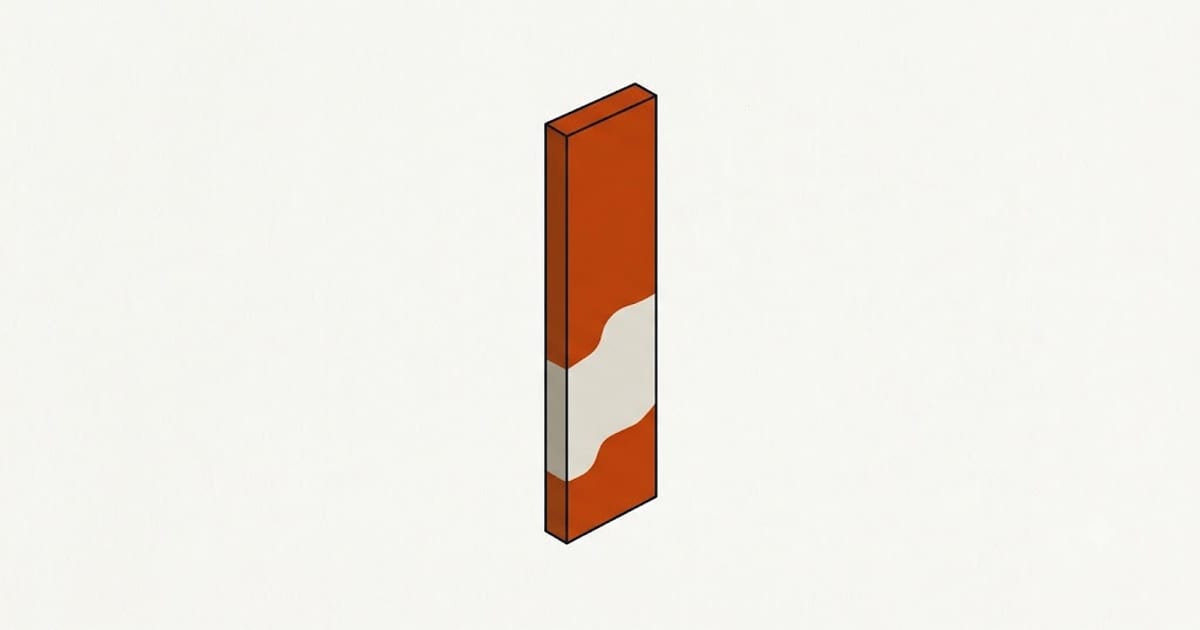
Efflorescence is the white, powdery or crystalline deposit that appears on basement walls and floors. It is mineral salt, and it got there by dissolving in water that moved through the concrete and then evaporated at the surface.
What it tells you
Water is passing through the wall. That is the whole message, and it is a useful one — efflorescence is a record of moisture movement that has already happened.
It also tells you roughly where. A band at the wall-floor joint, a patch below a window well, a line down from a crack: each points at the entry.
It does not tell you how much water, or whether the problem is current, since deposits persist long after the source is fixed.
What it is not
Not mould. Mould is organic, usually darker, often fuzzy, and grows on organic material — paper, wood, dust. Efflorescence is mineral, crystalline or powdery, and grows on masonry.
The distinguishing test: efflorescence dissolves in water and mould does not. Wet a patch and watch.
Not structural damage. The salt itself is inert.
Not harmful to breathe in ordinary quantities, though the damp conditions that produce it frequently support mould elsewhere, and that is a health question.
When it does cause damage
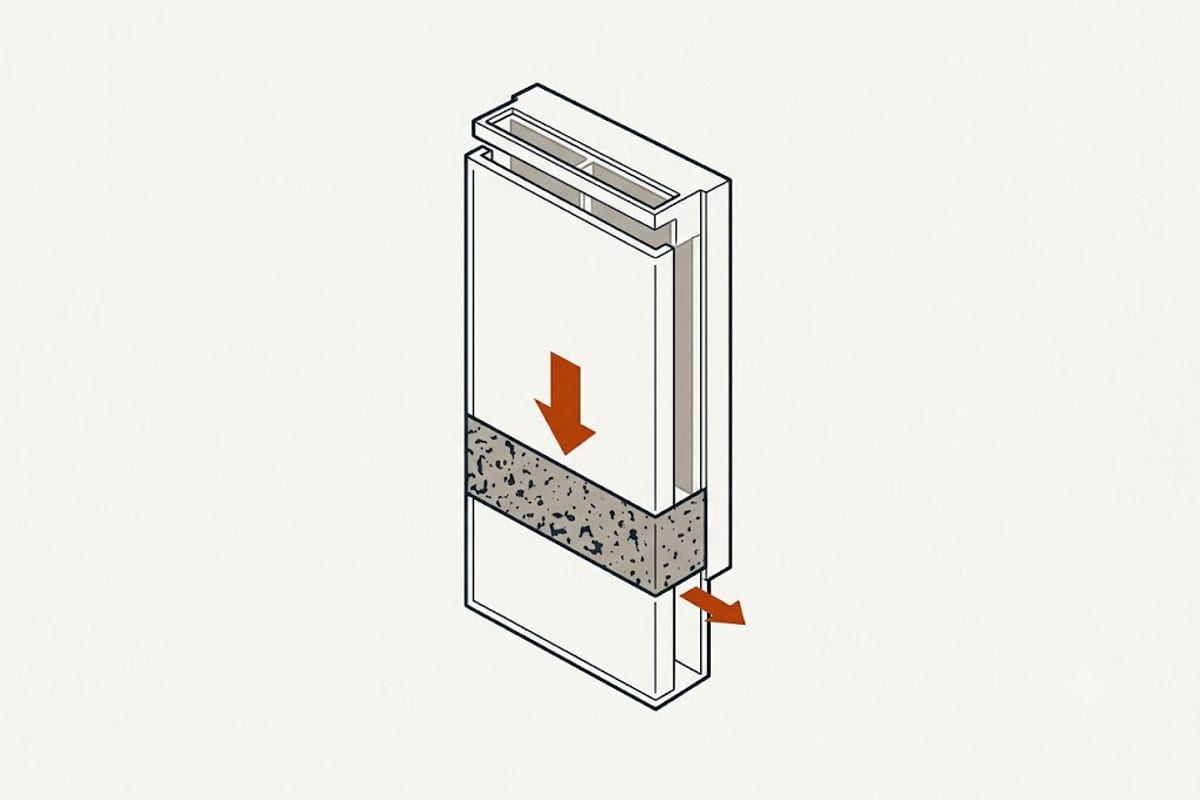
Spalling. Where salt crystallises inside the pores of the concrete rather than at the surface — sometimes called subflorescence — the crystal growth exerts pressure and flakes the surface off. This is a slow process and it is the one genuine damage mechanism.
Coating failure. Paint or sealer applied over an efflorescing surface loses adhesion, because the salt is deposited between the coating and the substrate.
Removing it
Dry brushing first, with a stiff brush. A great deal comes off dry, and doing it dry avoids redissolving the salt and driving it back in.
What remains can be washed with water or, on stubborn deposits, treated with a proprietary efflorescence remover. Acid washing works and it etches the concrete, so it is a last resort rather than a first move.
None of this fixes anything. It comes back as long as water keeps moving through, and the recurrence rate is a rough measure of how active the seepage is.
New concrete efflorescences too
A newly poured or newly built wall produces efflorescence for the first year or two simply from its own residual moisture curing out. That is expected, it diminishes, and it is not a sign of a leak.
The distinguishing feature is that it decreases over time without anything being done. Seepage-driven efflorescence persists or returns seasonally.
Using it as a diagnostic
Brush it all off and photograph the wall clean, with the date.
Come back after the next heavy rain and after the next thaw. Where it returns, and how quickly, maps the active entry points precisely — better than looking for damp, because the deposit persists after the wall dries.
That map is what tells a contractor where to work, and it is free.
What to do about the water
The same order as always: gutters and downspout extensions, then grading, then the specific entry point, then a drainage system if it persists.
Efflorescence at the wall-floor joint across a long run points at hydrostatic pressure and usually at a drainage answer. A single patch below a window well points at that window well, and that is a much smaller job.
Sealers, and why they usually disappoint
Masonry sealers marketed for basement walls work by penetrating the concrete or by forming a film. Applied over an actively seeping wall, both fail in the same way: water pressure behind the coating pushes it off, and the salt deposits between the coating and the wall accelerate it.
They can work on a wall that is dry and staying dry, as a vapour retarder. They do not work as a substitute for stopping water, and the peeling paint on many basement walls is the record of someone trying.