
Crack injection kits are sold to homeowners and they work. Whether one is appropriate depends entirely on the crack, and that judgement is the part a kit does not include.
When a kit is reasonable
A poured concrete wall, not block.
A vertical or near-vertical crack, non-structural, under about a quarter inch.
Not growing — measured, over months, rather than assumed.
Accessible for the full length of the crack, floor to wherever it stops.
Not at the wall-floor joint, which is not a crack.
Meet all five and a kit is a reasonable weekend job. Miss any and it is money spent on the wrong remedy.
When to stop and call someone
A horizontal crack, or a wall bowing inward. Structural, and injecting it seals a symptom while the cause continues.
A block wall. The resin escapes into the cores.
A crack that is widening. The wall is moving and a rigid repair will crack again.
Multiple cracks, which suggests a general condition rather than a single defect.
A crack wider than about a quarter inch, where an engineer's opinion is cheap relative to the risk.
What the process involves
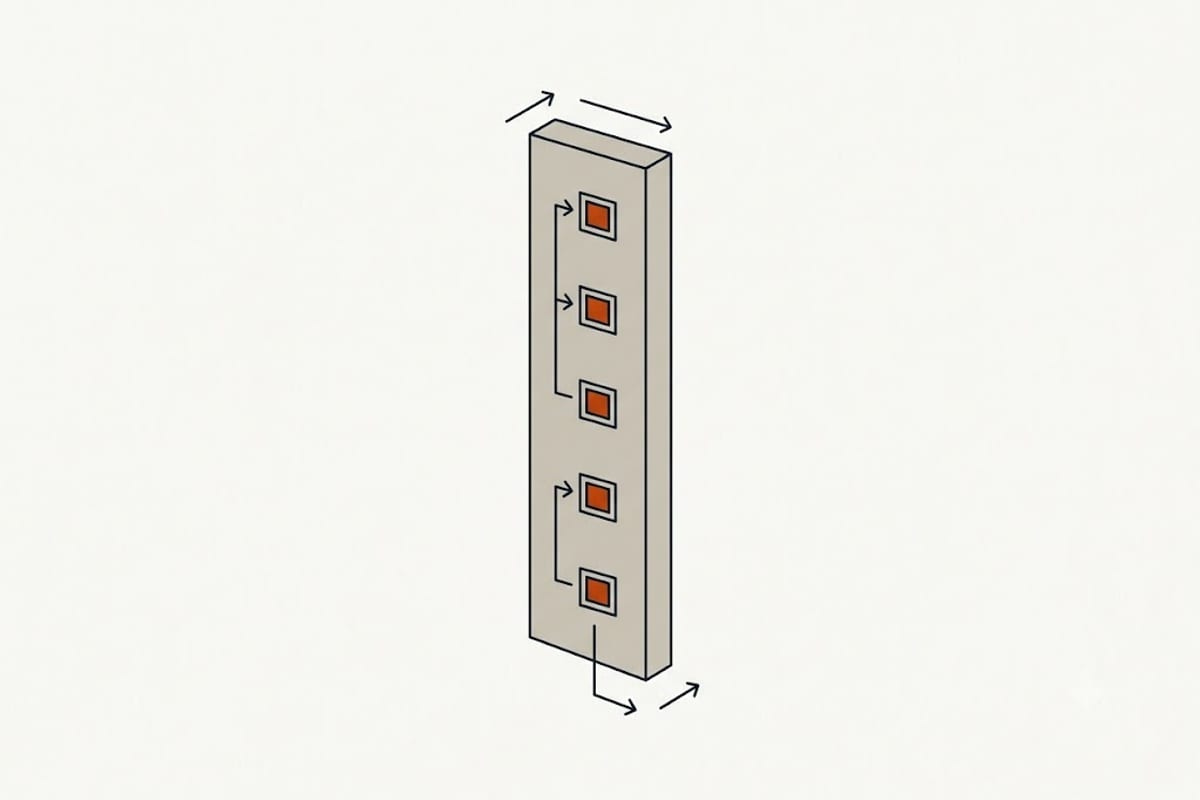
Surface ports are glued along the crack, typically at intervals of six to eight inches. The crack face between them is sealed with a surface paste so the resin cannot escape forwards.
Resin is injected at the lowest port until it appears at the next one up. That port is capped and the injection moves up, one port at a time.
The paste is removed after cure. Total working time is a couple of hours plus cure.
The failure mode
Incomplete fill. The resin needs to travel from the inside face to the outside face, and there is no way to see whether it did.
Injecting too fast, using too little material, or skipping the port-to-port sequence all produce a repair that seals the visible face and leaves the depth open. Water pressure then finds the unfilled section and the leak returns in the same place.
Going slowly, and continuing at each port until resin genuinely appears at the next, is what avoids it.
Choosing the resin
Polyurethane for a leaking crack. It foams on contact with water, tolerates a damp crack, and stays flexible. This is what most homeowner kits contain and it is usually the right choice.
Epoxy where structural continuity is wanted. It is rigid, it requires a dry crack, and it is unforgiving of any subsequent movement.
For a wet basement crack, polyurethane.
What it costs against having it done
A kit is a fraction of a professional repair, and a professional repair is itself the cheapest real intervention in this subject.
Given that gap is small in absolute terms, the argument for having it done is mostly about the diagnosis and the warranty rather than about the injection itself.
Before injecting anything
Fix the gutters and the grading first. A crack that leaks because a downspout discharges above it will keep leaking through the next crack.
And measure the crack for a few months. If it is moving, injection is the wrong step and knowing that costs nothing but time.
After the repair
Mark the ends of the crack with a dated pencil line and photograph it. If the crack extends beyond the repair later, that record shows it.
Then watch through the next wet season. A successful injection produces a dry crack in conditions that previously produced a wet one, and that is the only test that matters.
Where it leaks again in the same place, the fill was incomplete and re-injection is the answer rather than a different product. Where it leaks in a new place, the water is still arriving and the outside work was never done.
Safety
Injection resins are irritants and some are strongly exothermic as they cure. Gloves, eye protection and ventilation are not optional, and the manufacturer's data sheet is worth reading rather than skimming.
Polyurethane in particular expands with force and will find any gap in the surface seal, usually onto whatever is below.