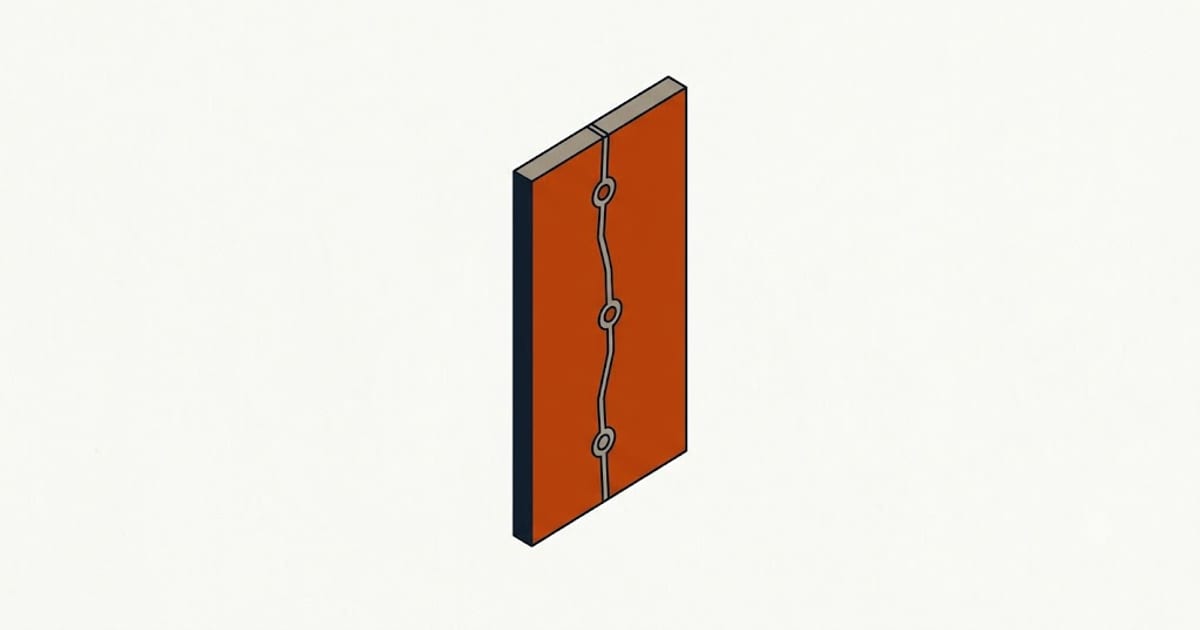
They are sold as alternatives and they are not. They do different jobs, and choosing on price gets it wrong about half the time.
Epoxy — structural
A rigid resin, stronger than the concrete around it. Injected properly, it welds the two sides of the crack back together, and the wall regains the strength it had.
Requires a dry crack. Epoxy will not bond to wet concrete, and moisture during cure ruins the joint. That rules it out for the actively leaking crack that most people are trying to fix.
Rigid, so it does not accommodate movement. If the crack is still moving — seasonal soil, ongoing settlement — the concrete will simply crack again beside the repair.
Use it for: structural cracks in a wall that needs its strength back, where the crack is dry and stable.
Polyurethane — watertight
Injected as a liquid that reacts with water and foams, expanding to fill the void and any side channels.
Wet is a requirement, not a problem. It cures using the water that is leaking, which makes it the material for an actively leaking crack.
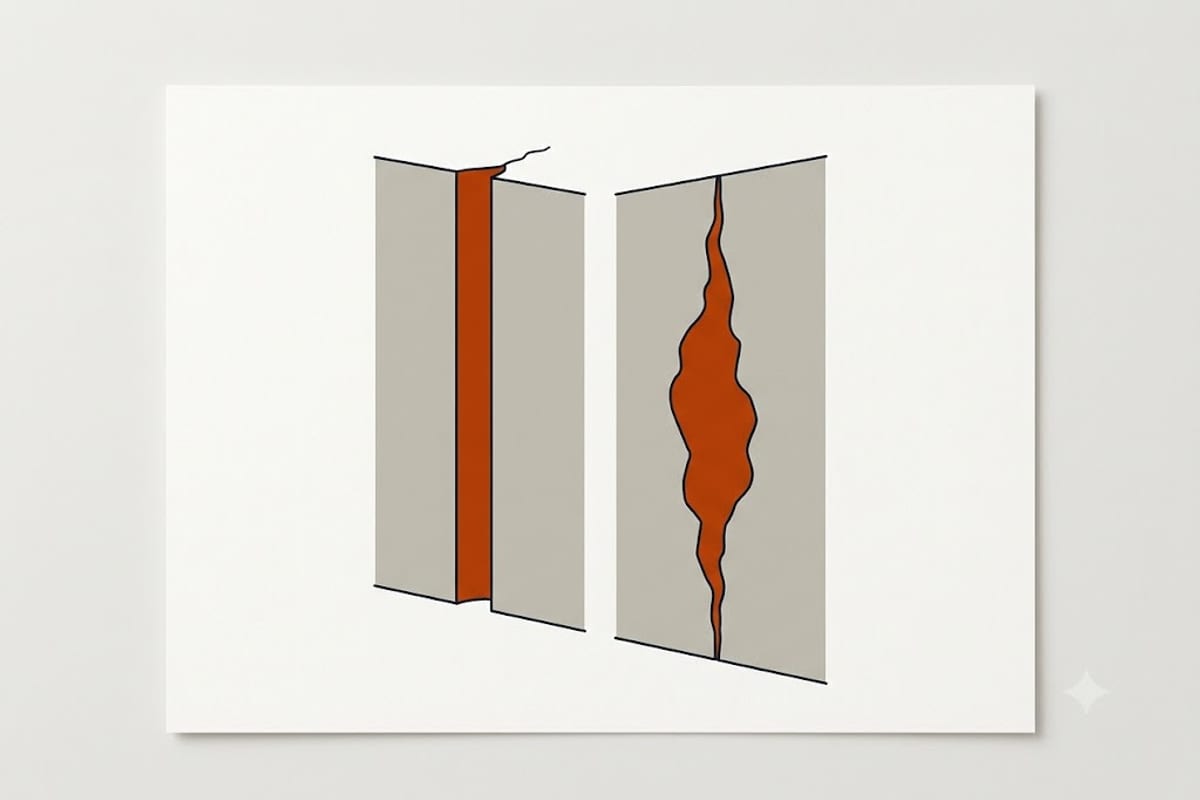
Stays flexible. It accommodates seasonal movement without failing, which matters where the crack opens and closes with the weather.
Adds no strength. It is a gasket, not a weld.
Use it for: stopping water through a non-structural crack, and any crack that is still moving.
Choosing between them
| Epoxy | Polyurethane | |
|---|---|---|
| Crack is leaking now | no | yes |
| Crack must regain strength | yes | no |
| Crack still moving seasonally | no | yes |
| Crack is dry and stable | yes | works |
| Cost | higher | lower |
Most residential basement work is polyurethane, because most residential cracks are non-structural vertical shrinkage cracks that leak.
Neither one fixes a horizontal crack
This matters more than the material choice. A horizontal crack in a foundation wall, particularly with bowing, is lateral soil pressure — the wall is being pushed inward.
Injection does nothing about the force causing it. That needs structural reinforcement: carbon fibre straps, steel beams, or wall anchors, specified by an engineer.
A contractor who offers to inject a horizontal crack and leave it at that is selling you a sealed crack in a wall that is still moving.
Neither one addresses why water is there
Injection stops water at that crack. If the reason water is against the wall is a downspout discharging at the foundation, it will find the next crack, or the floor-wall joint, or the next season's crack.
Injection is a repair, not a drainage strategy. It belongs after the outside work, not instead of it.
What the work looks like, and how long it lasts
Injection is a small job. Surface ports are fixed along the crack at 6 to 12 inch spacing, the face between them is sealed with a paste so the material cannot escape, and the resin is injected from the lowest port upward until it appears at the next one.
A typical crack takes an hour or two. The surface seal and the ports are removed afterwards, leaving a visible line but no protrusion.
Done correctly on a stable crack, both materials are permanent — they are not a coating that weathers. What fails is not the material but the assumption behind it: a crack that was still moving when it was filled with rigid epoxy, or a wall whose water problem was never addressed and which simply cracks somewhere else.
That is why the questions worth asking are about the crack and the water, not about the resin.
On DIY kits
They exist, they are inexpensive, and on a simple vertical crack in a poured wall they can work. Two things decide the outcome:
Port spacing and pressure. Ports every 6 to 12 inches, injected from the bottom upward, watching for material appearing at the next port before moving on. Rushing it leaves voids.
The crack must go right through. Injection fills a crack; it cannot fill a wall.
Block walls are a different matter — the cavities carry water sideways and injection at one point achieves very little. That is not a DIY case.