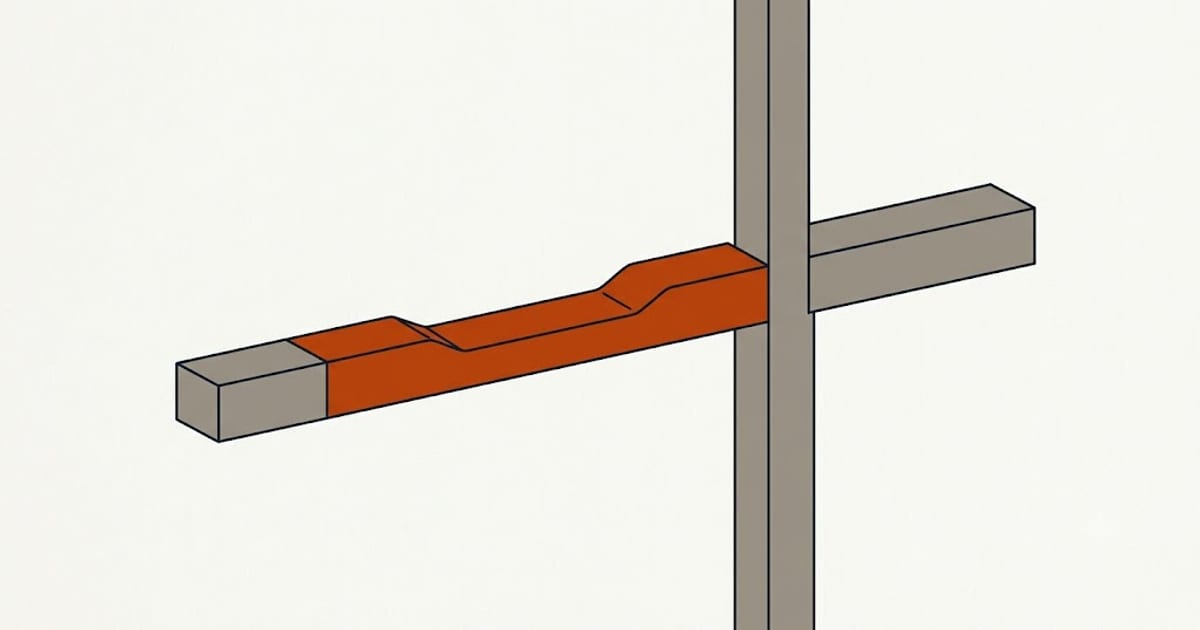
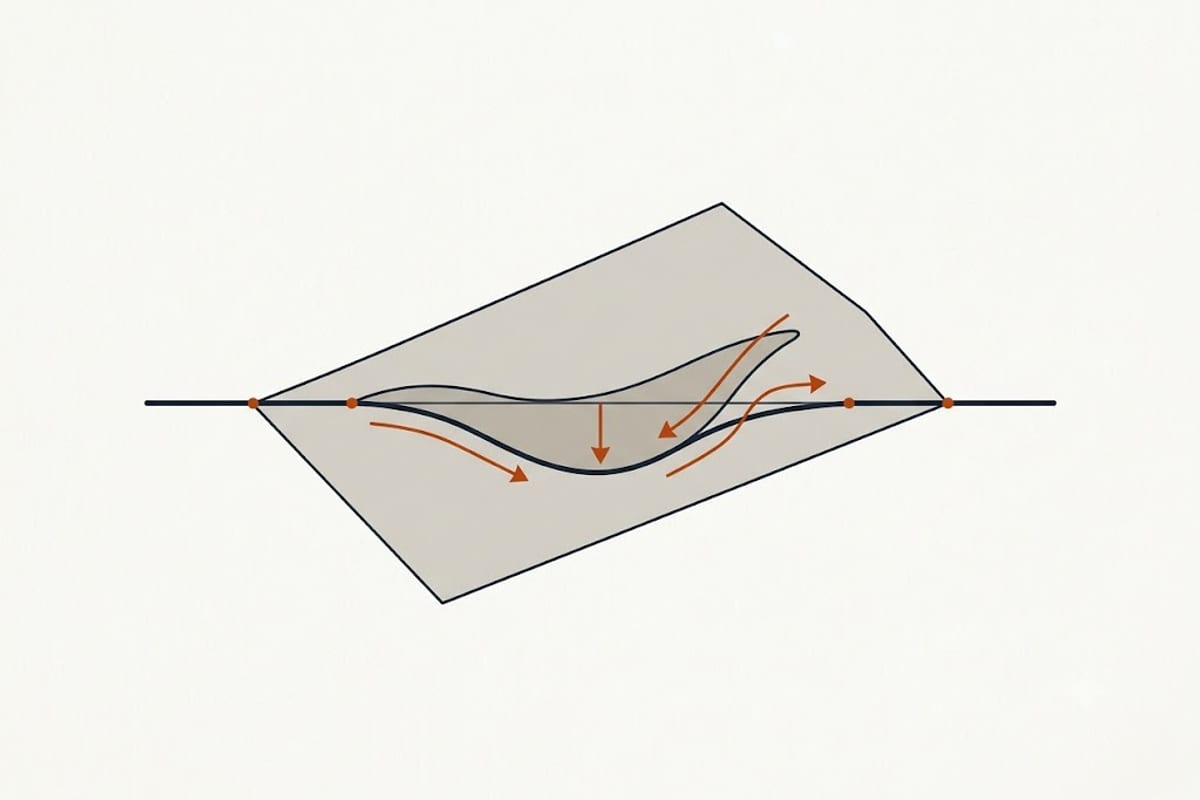
Soil excavated from a trench and put back occupies more volume than it did undisturbed. Over the following months it consolidates, and the surface drops.
Beside a foundation, that drop turns the ground fall away from the house into a channel running along it.
How much and how long
Settlement of several inches over the first year is normal on a deep trench, and it continues at a decreasing rate for a year or two after that.
The amount depends on how the backfill was placed. Dumped and left settles most; placed in layers and compacted settles least.
Why it undoes the work
An exterior system stops water reaching the wall. A settled trench collects surface water and delivers it to exactly the line where the wall meets the soil — the one place the whole job was designed to protect.
The membrane holds, and the drainage board and footing drain now have far more water to handle than they were intended to. On a system that was marginal, that is the difference.
Compaction during backfill
Layers, typically 8 to 12 inches, each compacted before the next.
Around the footing drain the material is stone rather than soil and is not compacted in the same way — over-compacting there crushes the pipe.
Compaction close to the wall has to be done carefully, since a plate compactor against a foundation wall can damage the membrane and, on a block wall, push it.
Ask how the backfill will be placed. "Pushed back in with the machine" is a specific answer and it predicts a trench that settles a long way.
Free-draining backfill
Replacing the excavated clay with granular material is better for drainage and it also settles less. It costs more and it is a common place for a quote to be trimmed.
Where the clay goes back, the drainage board is doing more of the work and the settlement will be larger.
What to agree before the work
Who returns to top up the trench, and when. Spring after the work is the natural time.
Whether that is included or chargeable, and whether it covers one visit or as many as needed.
Whether the final grade will be set slightly proud of the surrounding ground to allow for settlement, which is normal practice and looks odd until it settles in.
Landscaping timing
Planting or laying paving over a trench that has not finished settling means redoing it. Grass seed is fine and forgiving; a patio is not.
Where hard landscaping is going back, waiting a full year is the correct answer, and it is worth knowing that before the work starts rather than being surprised by it.
Checking it
Each spring for the first two or three years, walk the perimeter with a level or a straight board and confirm the ground still falls away from the wall.
Where it has dipped, add soil — not mulch, which decomposes — and re-establish the fall.
The wider point
Exterior waterproofing is the most permanent remedy available and it depends on the surface above it continuing to shed water. The membrane lasts decades; the grade above it does not look after itself.
Ten minutes with a level, once a year, protects the most expensive work anyone does to a basement.
Utilities in the backfill
Gas services, water mains, electrical laterals and irrigation lines frequently run in the same zone as the trench. Where any were exposed, note where they are and photograph them before backfill.
Settlement around a service can put strain on it, and a future homeowner digging in a flower bed will be glad the position was recorded.
The first heavy rain
Watch the perimeter during the first substantial storm after the work. Water should run away from the house along the whole line.
That single observation, made once, is the confirmation that the grade is right, and it is also the moment any low spot reveals itself before it has had a year to get worse.