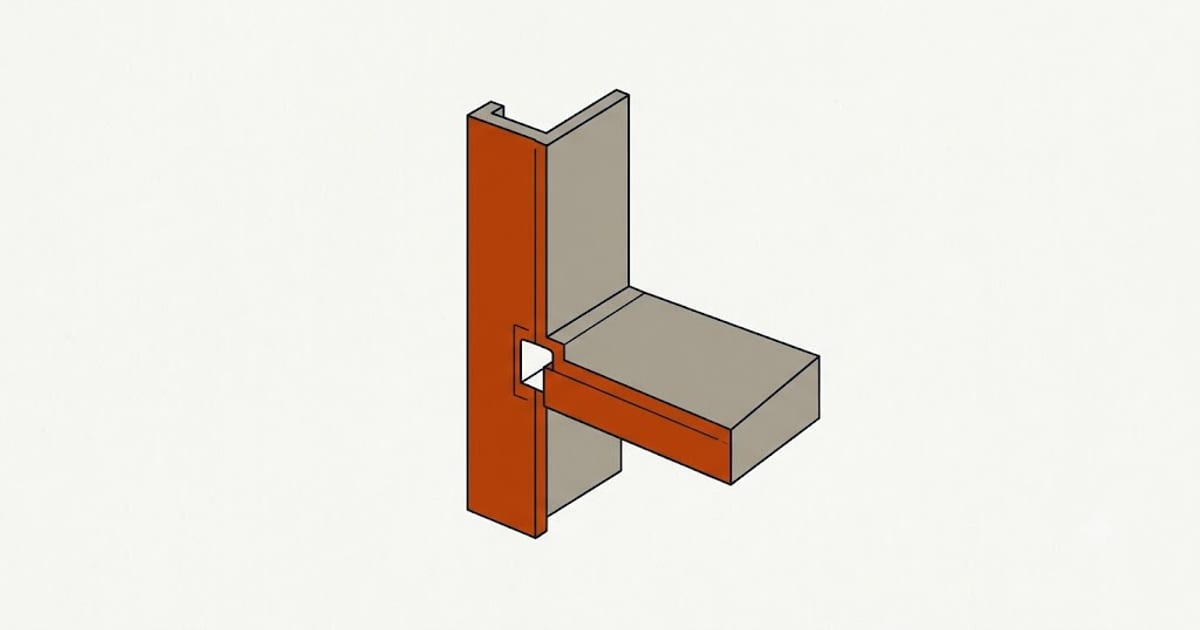
A baseboard channel system bonds a hollow moulding along the wall at floor level, sealed to the slab and the wall. Water arriving at the joint enters the channel and runs to a sump.
No slab cutting, no jackhammer, no concrete work, and a job measured in a day rather than several.
What it handles
Seepage at the wall-floor joint, which is the most common entry path, and water running down the wall face into the channel.
That covers a substantial share of wet basements, and where it applies the system works.
What it does not handle
Water under the slab. The channel sits on top of the floor; it has no connection to what is beneath it. Water rising through the slab or through floor cracks bypasses it entirely.
Hydrostatic pressure under the floor. A cut-in drain tile system relieves pressure beneath the slab edge; a surface channel does not.
Block wall cores. Weep holes can be drilled to drain the blocks into the channel, and this should be specified explicitly — without it, a block wall stays full.
High volumes. A channel has limited cross-section compared with a 4-inch pipe in stone.
Where it is genuinely the right choice
A finished floor that cannot be cut — in-floor heating, an expensive slab finish, or a floor at the limit of headroom.
Limited headroom, where the loss from a raised finished floor matters.
Speed and disruption, where a household cannot lose the basement for a week.
Modest, well-characterised seepage at the joint only.
Where it is the wrong choice
Water through the floor.
A large volume during storms.
A basement that will be finished, where the compromise in capacity is being taken on for the life of the finish.
Where the slab can be cut and the problem is significant, drain tile is the more capable system and the price difference is not usually large enough to justify the compromise.
Bond and failure
The channel's performance depends on the seal to the slab and to the wall. Concrete that is dusty, spalling or damp at the time of installation gives a poor bond, and a channel that has debonded leaks behind itself where nobody sees it.
Surface preparation is the whole quality question, and it is worth asking how the floor will be prepared.
It is still a drainage system
Everything the channel collects goes to a sump and out. The pump, the backup, the check valve and the discharge line all matter exactly as they do for drain tile, and they are the same failure points.
A quote for a channel system without a sump specification is incomplete.
Cost
Cheaper per linear foot than cut-in drain tile, primarily because there is no slab cutting, no spoil removal and no concrete replacement.
That saving is real and it is buying a system with less capacity. Whether that trade is correct depends on the diagnosis, which is the same conclusion as everywhere else in this subject.
The question to ask
"What happens if water comes up through the floor rather than at the joint?"
A contractor who answers that the channel will not address it is describing the product accurately. One who says it will has either misunderstood the system or is not describing it honestly.
Combining it with other work
A channel system pairs sensibly with crack injection: the injection handles discrete entries higher up the wall, and the channel catches what arrives at the joint. Together they cover more than either alone at modest cost.
It pairs badly with a plan to finish the basement, because the channel occupies the base of the wall where framing wants to go, and covering it removes access.
Where a finished basement is the goal, either cut-in drainage with a proper wall detail or exterior work is the better foundation to build on.