Everything an interior drainage system collects leaves through one pipe. That pipe is the least considered part of the installation and it is where the system fails.
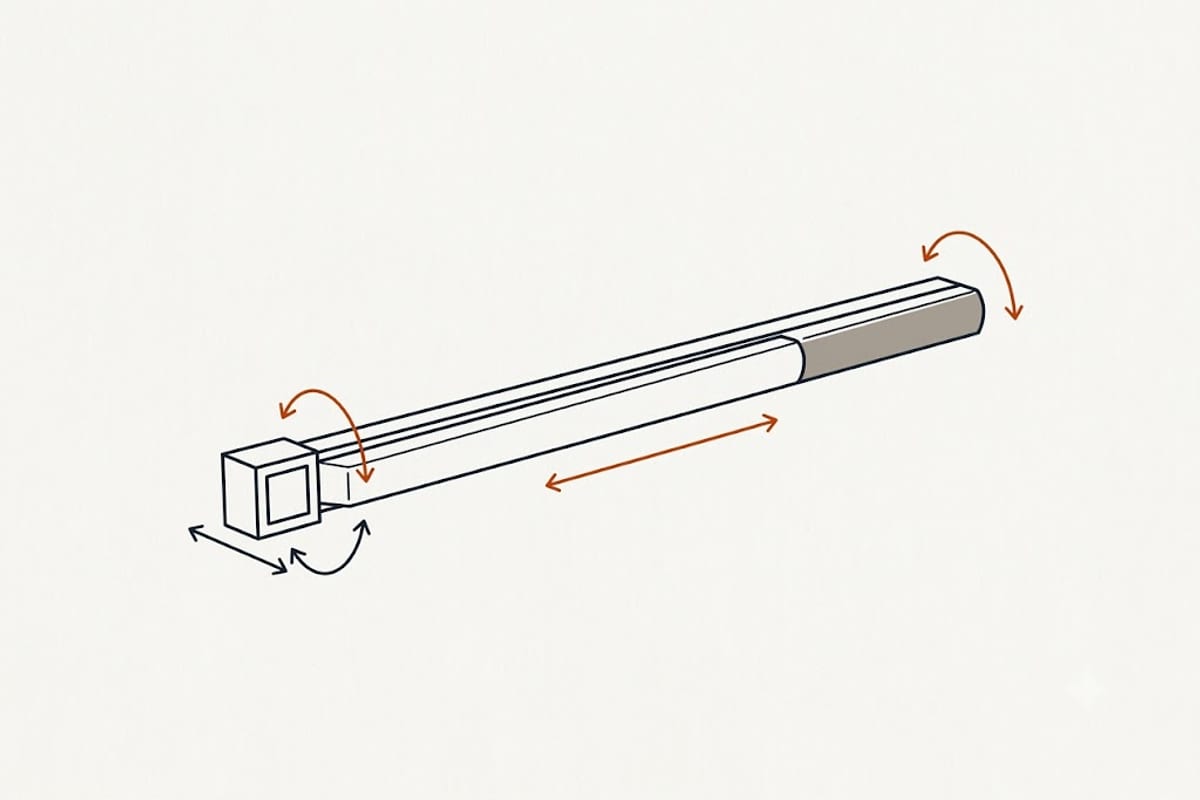
Discharge far enough away
Water dumped beside the foundation soaks back into the same soil, reaches the drain again, and the pump moves it in a circle. In freezing weather it also makes an ice sheet against the house.
Discharge well clear — commonly at least 10 feet, and further on flat or clay ground. Downhill where the site allows.
Buried rigid pipe to a pop-up emitter is the tidy approach. A surface hose works and gets moved by lawnmowers and frost.
What it must not connect to
The sanitary sewer. Prohibited in most jurisdictions, because it loads the treatment system with clean water.
A storm sewer, in some jurisdictions but not others. Check locally.
The footing drain, which returns the water to where it came from.
Freezing is the winter failure
A discharge line that ices up blocks. The pump then runs against a closed pipe, the basin fills, and the basement floods while the pump is running.
Three measures reduce it:
A freeze-relief fitting near the house — a tee with an opening that lets water escape at ground level if the line beyond is blocked. Cheap and effective, and it means a frozen line produces a puddle rather than a flood.
Slope the whole run so it drains empty between cycles. A sagging line holds water and that water is what freezes.
Oversize the outlet and keep it clear of snow and leaf litter, since the outlet end freezes first.
Some installations disconnect the buried section for winter and run a surface line, accepting that the water discharges closer to the house rather than not at all.
The check valve
Fitted in the vertical run above the pump, it stops the column of water in the pipe falling back into the basin each time the pump stops.
Without it the pump re-pumps the same water repeatedly, which shortens its life and makes the basin cycle constantly.
A check valve that has failed produces exactly that symptom — a pump cycling every minute or two with no water arriving — and it is a cheap part.
Noise
Check valves slam. A quiet check valve, or a short section of flexible coupling either side, removes the bang that carries through the house at night.
Where two pumps discharge
A primary and a backup should have separate discharge lines where possible. Sharing one line means a blockage stops both, and the backup exists precisely for the situation where something has gone wrong.
Where they must share, the tee should be arranged so that the backup can still discharge if the primary's check valve fails.
Testing the whole path
Twice a year, fill the basin with a bucket and watch the water leave at the outlet. That is the only test that covers the pump, the check valve, the line and the outlet together.
Testing the pump alone tells you the pump works, which is the part that was probably fine.
In a power cut
A battery backup pump discharging through the same frozen or blocked line is no better off than the primary. The winter checks matter more once there is a backup, not less, because the backup makes it easy to assume the system is covered.
Where the outlet ends up in practice
The two failures at the far end are burial and blockage. A pop-up emitter set in a lawn disappears under thatch within a couple of seasons, and a pipe ending in a flower bed silts up.
Mark the outlet position, keep the area around it clear, and check it each autumn before the freeze and each spring after it. A discharge that has been buried for a year is a system that has been running against back pressure for a year.
Volume, in perspective
A pump moving a few thousand gallons an hour during a storm is delivering a substantial volume to one point in the garden. On clay ground that produces a permanently wet area, and on a slope it produces erosion.
Where the discharge runs often, it is worth planning where that water ends up rather than letting it find its own way — a dry well, a swale, or a connection to a storm system where permitted.